

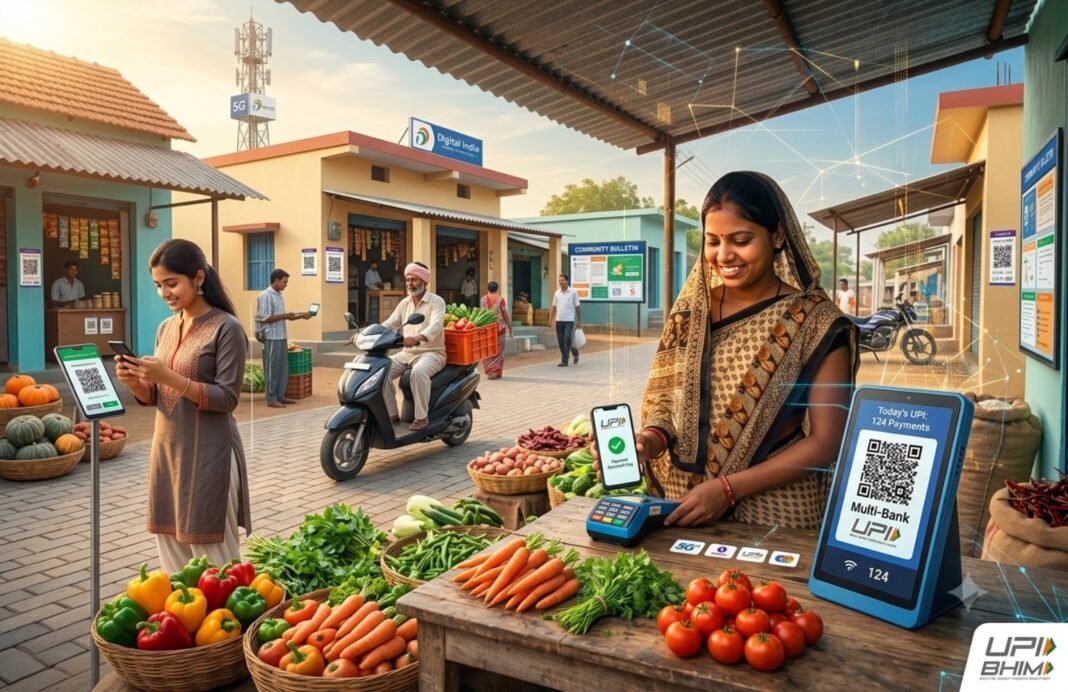
India’s digital transformation is moving beyond smartphones and online payments. From small shops accepting UPI to citizens accessing digital documents and public services, the country is building digital systems with growing relevance for the wider Global South.
By Global Nexus Media News Desk
India’s digital transformation is increasingly visible in everyday life. A customer pays a shopkeeper by scanning a QR code, a student retrieves a document online, and a small business receives money without depending entirely on cash. These ordinary transactions are part of a much larger shift: the development of India’s digital public infrastructure.
The system combines digital identity, payments, document services and online platforms to make selected services easier to access. Its significance lies not only in the technology itself, but also in how that technology can support economic participation, public-service delivery and financial inclusion.
For India, the next challenge is to ensure that the benefits of this transformation reach people across regions, income groups and levels of digital literacy.
UPI: Making Digital Payments Part of Everyday Commerce
The Unified Payments Interface, commonly known as UPI, has become one of the most recognisable parts of India’s digital economy. It enables users to transfer money between participating bank accounts through supported mobile applications.
For many small retailers, street vendors and service providers, QR-code payments offer another way to receive money. Customers can pay without carrying exact change, while businesses can reduce their dependence on cash handling.
Official figures underline the scale of the shift. According to a Ministry of Finance statement published by the Press Information Bureau on 16 March 2026, UPI accounted for 81% of retail digital payment transactions by volume in financial year 2024–25. The same release reported 22,167.90 crore retail digital payment transactions across payment systems during that year.
These figures describe the wider retail digital-payment ecosystem and UPI’s share of it; they should not be confused with the number of individual users or the total value of transactions.
The wider lesson is that digital payments are no longer limited to large companies or major urban centres. They have become an important part of the infrastructure supporting everyday commerce.
Beyond Payments: Aadhaar, DigiLocker and Digital Services
India’s digital public infrastructure extends beyond money transfers.
Aadhaar provides a digital identity framework. DigiLocker allows users to access and share eligible digital documents, while platforms such as UMANG bring together selected government services through digital channels.
These services can reduce the need to carry physical documents or make repeated visits to offices in cases where digital access is accepted. They can also help institutions verify information more efficiently, subject to the relevant rules and safeguards.
A government statement published on 29 July 2026 reported more than 144 crore Aadhaar identities, 55.49 crore UPI users and 71.66 crore DigiLocker users. These are figures reported by the government at that time, and the indicators measure different things; they should not be added together or treated as unique individuals across the entire system.
The scale is significant, but the real measure of success is whether the infrastructure helps people complete tasks more easily, securely and reliably.
Connecting Rural India
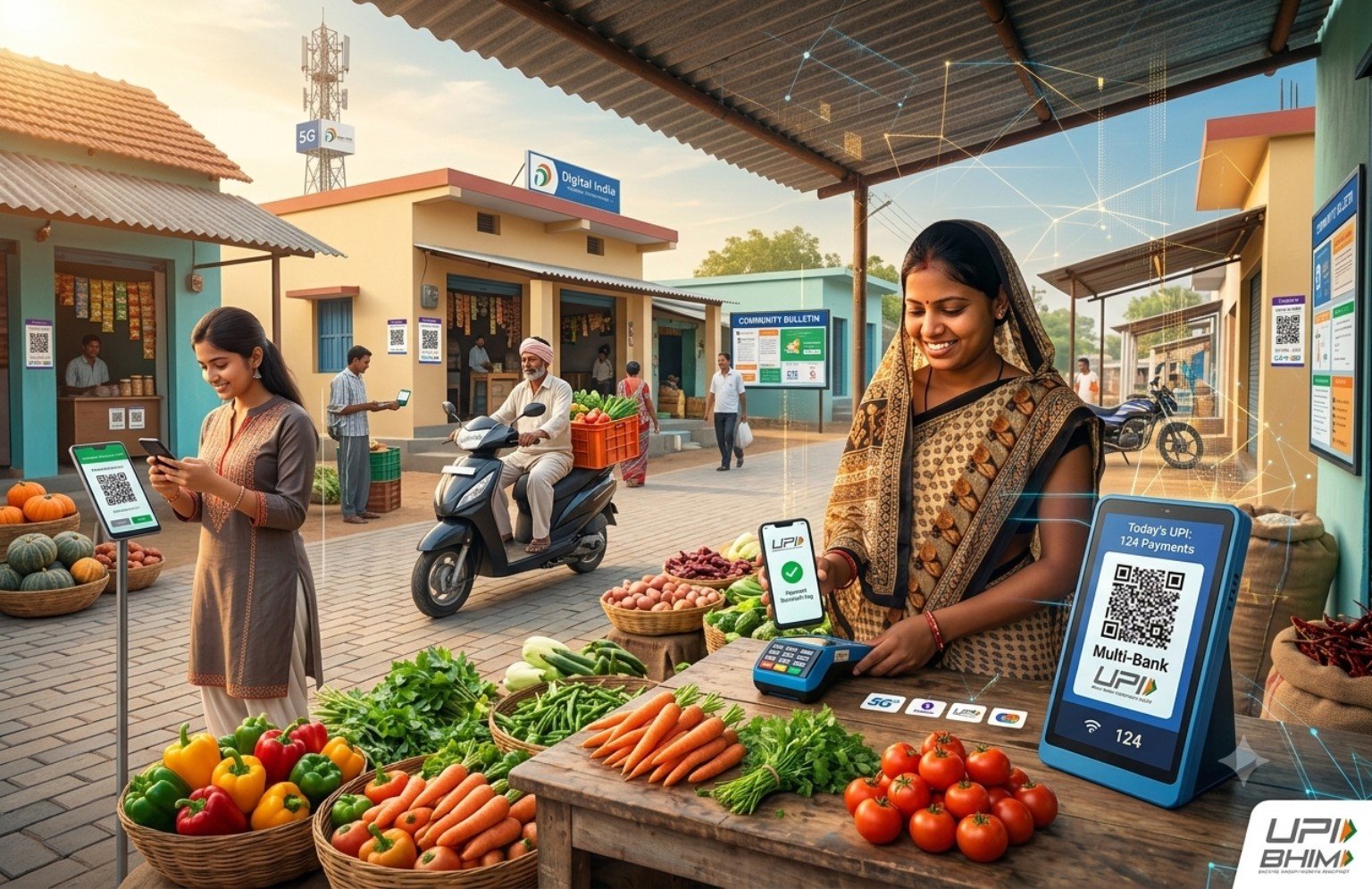
Digital progress cannot be measured only by the number of applications available or transactions completed. Connectivity matters too.
For people in rural communities, internet access can influence whether they can use online education, banking, healthcare information and government services. The availability of a digital platform does not automatically mean that every household can use it.
The government’s Digital India programme includes initiatives intended to expand rural connectivity and provide assisted access through Common Service Centres. Such centres can help people who lack a suitable device, reliable connectivity or confidence using online services.
However, practical barriers remain. Weak connectivity, language limitations, accessibility needs, digital fraud and difficulties recovering access to accounts can all prevent people from benefiting fully.
The next phase of digital development must therefore combine infrastructure with local support, digital literacy and services designed for users with different needs.
What India’s Model Could Mean for the Global South
India’s experience has attracted international interest because it offers lessons about building digital services at population scale. For developing economies, the relevant questions include how to expand access to payments, improve public-service delivery and build systems that can work across institutions.
India’s experience does not mean that one model can be copied unchanged everywhere. Countries differ in their banking systems, laws, infrastructure, languages and public institutions. Digital identity and data-sharing systems also require careful safeguards.
The more useful lesson is that digital infrastructure can be treated as a foundation for wider economic and social participation, rather than simply as a collection of private applications.
For the Global South, cooperation around technical standards, cybersecurity, affordability and local capacity may be as important as the technology itself.
The Work Ahead: Inclusion, Privacy and Trust
A successful digital system must be accessible as well as extensive.
People without smartphones, stable internet access or digital skills should not be left behind when services move online. Where possible, essential services need practical alternatives and assisted access.
Privacy and cybersecurity are equally important. Citizens should understand how their information is used, have clear ways to seek help and be protected against fraud and unauthorised access. Systems should be designed to minimise unnecessary data collection and provide effective grievance mechanisms.
Digital payments can also create new risks for users who are unfamiliar with scams or social-engineering tactics. Public awareness, responsive customer support and effective enforcement remain necessary parts of a trustworthy digital ecosystem.
These are not arguments against digital progress. They are essential conditions for making that progress sustainable.
A Digital Foundation for India’s Next Phase of Growth
India’s digital public infrastructure shows how technology can become part of the everyday foundations of economic activity and public-service delivery. UPI, Aadhaar, DigiLocker and related platforms serve different purposes, but together they illustrate the ambition to make selected digital services available at large scale.
The next test is not simply whether more people can access digital platforms. It is whether those platforms remain dependable, inclusive, secure and useful in real life.
For India, that means extending connectivity, improving digital literacy, strengthening consumer protection and continuing to build public trust. For other developing countries, India’s experience offers practical lessons to study and adapt to local needs.
The future of digital development will be measured not only by the number of transactions or accounts, but by how effectively technology helps people participate in the economy and access the services they need.
Global Nexus Media Perspective: India’s digital transformation is an important story of scale and innovation. Its lasting value will depend on turning that scale into secure, accessible and meaningful benefits for citizens.