

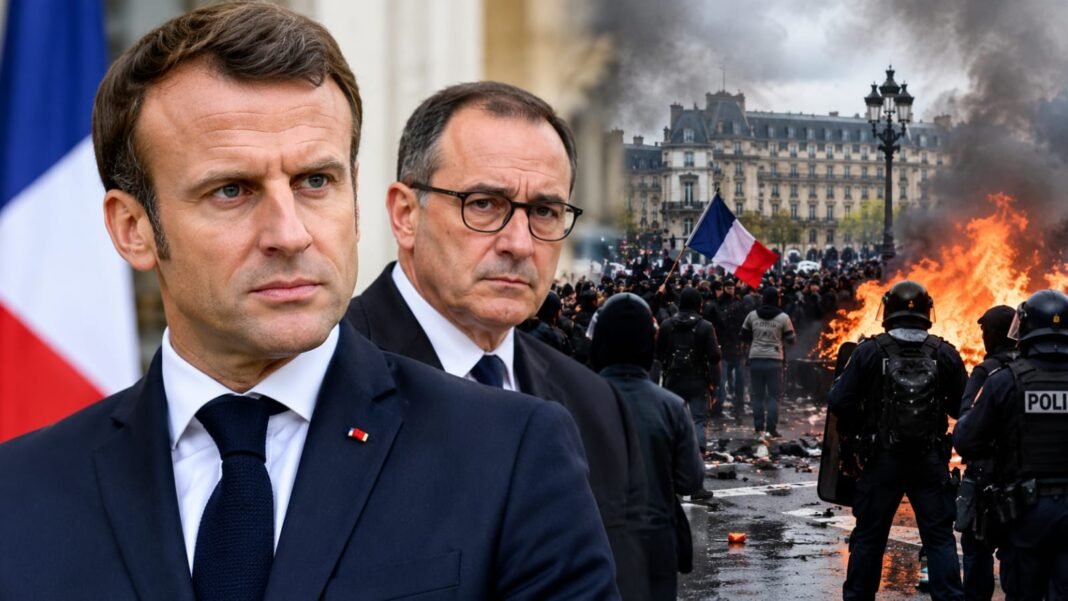
PARIS — French President Emmanuel Macron has rejected the resignation of Interior Minister Laurent Nuñez following a weekend of violent unrest that spread across several major French cities. The government is facing questions over security arrangements after demonstrations against rising living costs and deteriorating public services escalated into clashes, vandalism and looting.
On Monday, October 19, the French presidency confirmed that Macron had refused to accept Nuñez’s resignation, citing the need for continuity in the command of law-enforcement agencies during the crisis. The president also called for greater transparency regarding intelligence and planning failures that may have contributed to the scale of the violence.
The developments have placed renewed pressure on the French administration as authorities work to restore public order, protect businesses and investigate the damage caused during the unrest.
Why Did Protests Turn Violent in France?
The demonstrations followed weeks of student protests and wider public dissatisfaction over the cost of living and conditions in schools. What began as nationwide demonstrations escalated into violent confrontations between groups of protesters and police officers in several cities.
According to reporting by The Associated Press, unrest affected Paris, Lyon, Marseille and other locations. Some groups set fires, attacked public buildings and looted shops, while many people had participated in peaceful demonstrations over economic and public-service concerns.
The distinction between peaceful protesters and those involved in violence remains important. Participation in a demonstration does not, by itself, establish responsibility for criminal acts committed during the unrest.
The protests have also revived broader debates about public spending, the quality of essential services and the government’s response to economic pressure.
More Than 2,400 Arrests Reported
French authorities reported approximately 2,400 arrests during the weekend of unrest, according to The Associated Press. The arrests were made as police responded to violence, property damage and attacks on public buildings.
One of the most serious incidents occurred in Limoges, where a fire severely damaged the historic city hall. Businesses in several cities also suffered damage or looting, creating additional financial pressure for shopkeepers and local communities.
Authorities are examining evidence, including photographs and video recordings, as part of their efforts to identify those suspected of involvement in criminal activity.
The arrests represent a significant law-enforcement operation, but they should not be interpreted as proof that every person detained has committed an offence. Individual responsibility must be determined through the legal process.
Why Did Macron Reject the Minister’s Resignation?
Nuñez offered to resign following the violence, acknowledging concerns about the authorities’ response. Macron, however, decided that the minister should remain in office while the government addresses the immediate security situation.
The presidency said continuity in the leadership of law enforcement was necessary under the circumstances. Macron also instructed Nuñez to examine failures in intelligence gathering and advance planning and to introduce changes to policing operations where required.
The decision means that the interior minister will continue to oversee the government’s response while questions remain about how authorities assessed the risk of widespread disorder.
The episode has also raised questions about accountability within the administration. An investigation into planning and intelligence failures could help establish whether warning signs were missed and what changes may be needed to prevent similar incidents.
Curfews and Security Restrictions Introduced
French authorities introduced local security restrictions on October 19 in an effort to prevent further violence.
Reuters reported that restrictions affected parts of Paris, Lille and Nice, while other municipalities also imposed measures addressing public gatherings and overnight activity. Paris police announced restrictions on demonstrations in certain areas and a temporary overnight curfew around Place de la République and Les Halles.
The measures were designed to protect residents, businesses and public property while allowing authorities to respond to local security conditions.
France’s government has not imposed a blanket curfew across the entire country. Instead, restrictions have been applied to particular locations according to the situation on the ground.
The authorities’ response will be closely watched as officials attempt to balance public safety with the right to peaceful assembly.
Political Disagreement Over the Causes of Violence
The unrest has triggered disagreement among French political leaders about who was responsible for the violence and how the government should respond.
Prime Minister Sébastien Lecornu blamed far-left groups for involvement in some of the disorder. Opposition figures, including left-wing leader Jean-Luc Mélenchon, challenged the attribution and called for evidence to support such claims.
These competing statements underline the political sensitivity of the situation. Although authorities have reported violent acts and arrests, responsibility for particular incidents must be established through evidence rather than political accusations alone.
The protests have also highlighted the challenge of addressing economic grievances while preventing violence and protecting public institutions.
Economic Impact on Businesses and Markets
The unrest has created financial concerns for businesses affected by looting and property damage. Retailers in central Paris and other cities reported damaged premises, while some businesses temporarily closed as security restrictions took effect.
Reuters reported that the unrest was adding to investor concerns at a time when the French government was also facing pressure over public finances and the need to advance its budget plans.
The economic consequences could extend beyond the immediate cost of repairs. Businesses may face interruptions to trading, insurance claims and uncertainty over when normal operations can resume.
However, the long-term economic impact will depend on the duration of the unrest, the scale of damage and the effectiveness of measures to support affected businesses.
What Happens Next?
The French government faces several immediate tasks: preventing further violence, investigating the security response, holding suspects accountable through due process and helping affected businesses recover.
Further demonstrations have been called by student organisations and other groups, meaning authorities may need to maintain heightened security in the coming days. The government will also face pressure to explain what went wrong and whether changes to policing and intelligence procedures are necessary.
The situation also presents a wider challenge for French policymakers. Addressing concerns about living costs and public services may require measures beyond policing, while maintaining public order remains an immediate responsibility.
For now, Macron’s decision to retain Nuñez keeps the existing security leadership in place during a critical period. Whether the government’s response restores public confidence will depend on the investigation’s findings, the handling of further demonstrations and the measures taken to address the concerns raised by protesters.
Conclusion
France’s latest unrest has become a major test of public security and government accountability. Macron’s rejection of the interior minister’s resignation signals that the administration intends to maintain continuity in law enforcement while examining failures in the response to the violence.
With thousands of arrests reported and businesses counting their losses, authorities must now establish responsibility for individual incidents and prevent further disorder without treating peaceful protest as a criminal act.
The coming days will be important in determining whether the security measures reduce violence and how the French government responds to the underlying economic and public-service concerns.


