

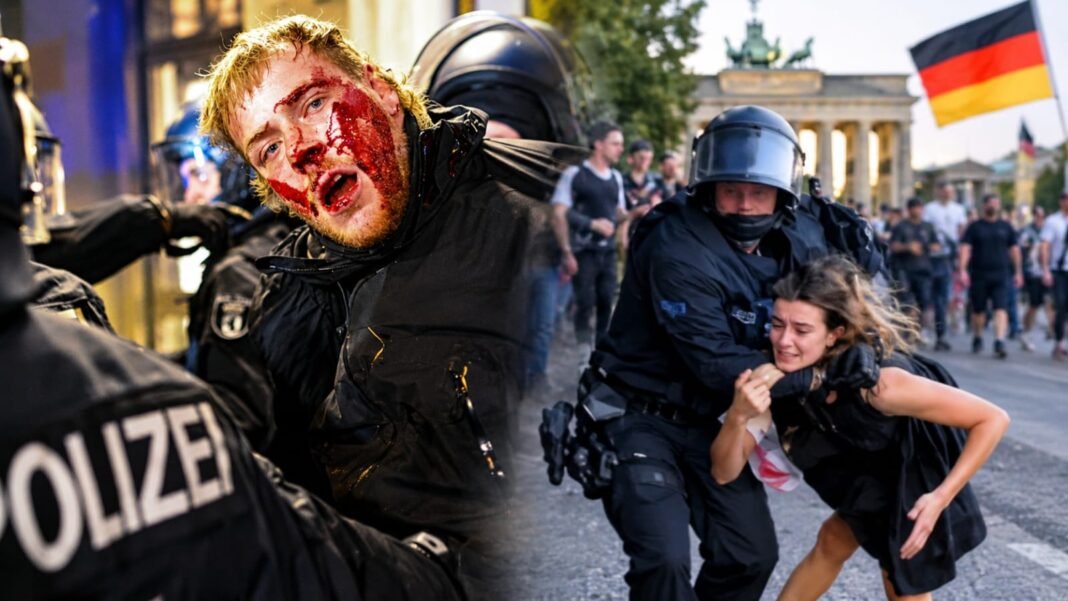
German protests raise questions about youth demands, democratic freedoms and the balance between public order and the right to peaceful assembly.
BERLIN, November 1, 2026: Germany witnessed youth-led demonstrations across several cities on October 31, as thousands of people gathered to raise concerns about economic pressures, education, public services and proposed military service policies. However, some demonstrations turned violent, prompting police intervention, arrests and the use of crowd-control measures.
The most significant developments were reported in Berlin, Frankfurt, Hamburg and Cologne. In Berlin, police brought a particular evening protest march to an early end after clashes and incidents involving objects being thrown at officers. According to German media reports, up to 56 people were temporarily detained and 27 police officers sustained minor injuries.
The incident has attracted attention internationally, particularly because of the debate surrounding the limits of public demonstrations and the responsibilities of law-enforcement agencies in democratic societies.
Why Did German Youth Take to the Streets?
The demonstrations were organised under the youth-led initiative “Gen Z regelt”, which translates roughly as “Gen Z takes charge”.
Young demonstrators raised concerns about rising living costs, education funding, social spending, climate protection and proposals concerning compulsory military service.
The movement reportedly organised demonstrations in approximately 34 German cities. Young people used the gatherings to demand greater political attention to issues affecting their generation and future opportunities.
The protests reflected wider concerns about economic security and the role of younger citizens in decisions concerning education, employment and national policies.
Berlin Protest Stopped After Clashes
In Berlin, an evening demonstration titled “GenZ hat genug!” began near Rosenthaler Platz. According to reports by German broadcaster RBB, approximately 700 people initially participated, with the crowd reportedly increasing to around 3,500.
Police said that some participants threw stones, bottles and eggs at officers and set off fireworks. Following the escalation, authorities decided to terminate the march before it reached its planned destination.
German media outlet ntv reported that up to 56 people were temporarily detained and 27 police officers suffered minor injuries.
However, it is important to clarify that police stopped this particular demonstration following reported incidents of violence. There was no confirmed nationwide prohibition on protests in Germany.
Other demonstrations, including a separate gathering near Berlin’s Brandenburg Gate, continued peacefully.
Violence Reported in Other Cities
Berlin was not the only city to experience tensions. In Frankfurt, masked individuals reportedly looted stores and damaged commercial properties. Police also reported incidents involving incendiary devices.
In Hamburg, barricades were set on fire, while authorities used water cannons to control the situation. Reports also described clashes and crowd-control operations in Cologne.
Although the majority of participants joined demonstrations to express their concerns, violent incidents involving some individuals created additional challenges for police and emergency services.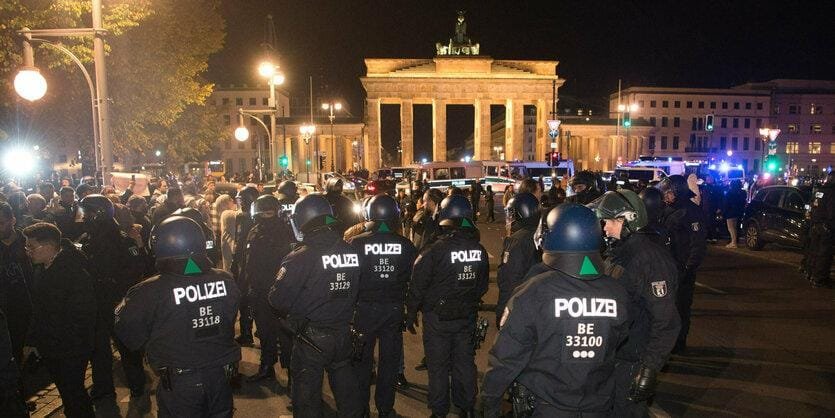
Why Does This Matter for India?
The developments in Germany are relevant to India because the right to peaceful protest is an important constitutional freedom.
Article 19(1)(a) of the Indian Constitution guarantees freedom of speech and expression, while Article 19(1)(b) protects citizens’ right to assemble peacefully and without arms.
However, these rights are subject to reasonable restrictions under Article 19, including considerations relating to public order and national security.
For India, Germany’s experience highlights an important democratic question: how can governments protect peaceful demonstrations while preventing violence and maintaining public safety?
India has witnessed numerous student movements, farmers’ demonstrations, labour protests and public campaigns over the years. Such gatherings provide citizens with an opportunity to communicate their demands and hold authorities accountable.
At the same time, violence, destruction of public property and attacks on law-enforcement personnel raise serious concerns about public safety.
The distinction between peaceful protesters and individuals involved in violence is therefore essential when authorities respond to demonstrations.
A Wider Message for Democracies
Germany’s latest youth demonstrations highlight the growing importance of listening to younger generations. Economic uncertainty, education, employment opportunities and public spending are issues that affect young people across different countries, including India.
The events also demonstrate that maintaining public order and protecting democratic freedoms require careful decisions from both authorities and protest organisers.
As developments continue, the central question remains whether democratic instit utions can provide meaningful space for peaceful dissent while ensuring the safety of citizens.
Global Nexus Media will continue monitoring developments in Germany and their implications for democratic rights, youth movements and public order worldwide.


