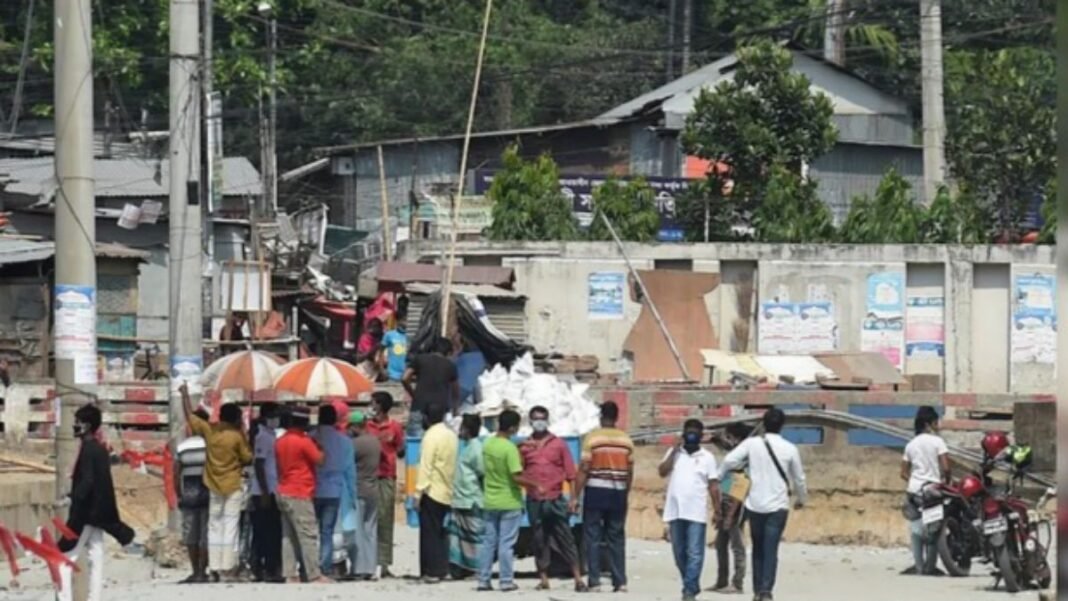
A report has raised concerns over alleged misleading livestreams in which poor neighbourhoods of Dhaka, the capital of Bangladesh, are reportedly being presented to Chinese audiences as locations in Delhi, India. The claims have brought attention to the growing problem of misleading online content and the challenges of verifying information shared through social media platforms.
According to the report, livestreamers are broadcasting footage from localities in Dhaka while telling viewers in China that the scenes are from Delhi. The difference between the actual filming location and the location allegedly communicated to viewers has raised questions about the authenticity of such broadcasts and the possible reasons behind them.
The issue is particularly significant because livestreaming platforms allow people to watch streets, markets and neighbourhoods in different countries without travelling there. Viewers often depend on the descriptions and explanations provided by content creators to understand what they are watching.
Dhaka Footage Allegedly Shown as Delhi
The central allegation concerns livestreams recorded in economically disadvantaged neighbourhoods of Dhaka. Although the footage reportedly shows locations in Bangladesh, audiences in China are allegedly being told that the scenes are from Delhi.
Such broadcasts can create a misleading impression among viewers who are unfamiliar with the geographical differences between the two cities. People watching these streams may believe they are seeing everyday conditions in India’s capital when the footage actually comes from another country.
The distinction between the filming location and the location claimed by a streamer is important. While the videos themselves may show genuine street scenes, incorrect location information can change the way audiences interpret the footage.
The report has brought attention to how online creators can influence perceptions of countries and cities through seemingly ordinary live broadcasts.
Why Are Chinese Audiences Watching These Streams?
Livestreaming has become an increasingly popular form of digital entertainment. People use social media platforms to show their daily lives, local markets, public spaces and neighbourhood activities to audiences around the world.
For viewers, these broadcasts can provide a window into places they may never have visited. Unlike edited videos, livestreams offer real-time footage, which can make the content appear more direct and authentic.
However, the authenticity of a live video does not automatically guarantee that its description is accurate. A streamer can broadcast genuine footage while providing incorrect information about where it was recorded.
In the reported case, the alleged presentation of Dhaka neighbourhoods as Delhi raises concerns about how easily audiences can be misled when they rely entirely on a broadcaster’s claims.
Concerns Over India’s Image
The allegations have also raised questions about the possible impact of misleading videos on India’s international image.
Delhi is one of India’s most recognised cities and serves as the country’s political and administrative centre. Its streets, residential areas, markets and public infrastructure are frequently discussed in international media and online content.
If footage from another country’s neighbourhoods is deliberately presented as Delhi, viewers could develop an inaccurate understanding of the Indian capital.
At the same time, the presence of poverty or difficult living conditions in a video does not, by itself, establish an attempt to damage a country’s reputation. Large cities across the world face economic inequality and infrastructure challenges.
The main concern is whether the location is being intentionally misrepresented and whether audiences are receiving false information.
Social Media Platforms Face Verification Challenges
The allegations highlight a wider challenge for social media companies. Livestreaming allows content to reach viewers immediately, often without the detailed editorial checks associated with traditional news organisations.
Although platforms have systems for reporting misleading content, verifying the exact location of every live broadcast can be difficult.
Users may not always have the information or tools needed to distinguish between genuine location claims and misleading descriptions. This makes transparency and responsible content creation particularly important.
Clear location information, stronger reporting mechanisms and greater awareness among viewers could help reduce the spread of misleading online content.
Questions That Need Further Investigation
Several important details remain necessary to establish the full extent of the reported activity. These include the identities of the livestreamers, the exact neighbourhoods in Dhaka, the platforms used, the number of broadcasts involved and the evidence supporting the alleged location claims.
It is also important to establish whether the streamers knowingly misrepresented the locations or whether there were other explanations for the descriptions given during the broadcasts.
Any response from the platforms concerned or relevant authorities would also help clarify the matter.
The reported incident highlights how digital content can influence international perceptions even when it is not part of a formal news broadcast. As livestreaming continues to connect audiences across countries, accurate descriptions and transparent location information remain essential for maintaining trust online.