

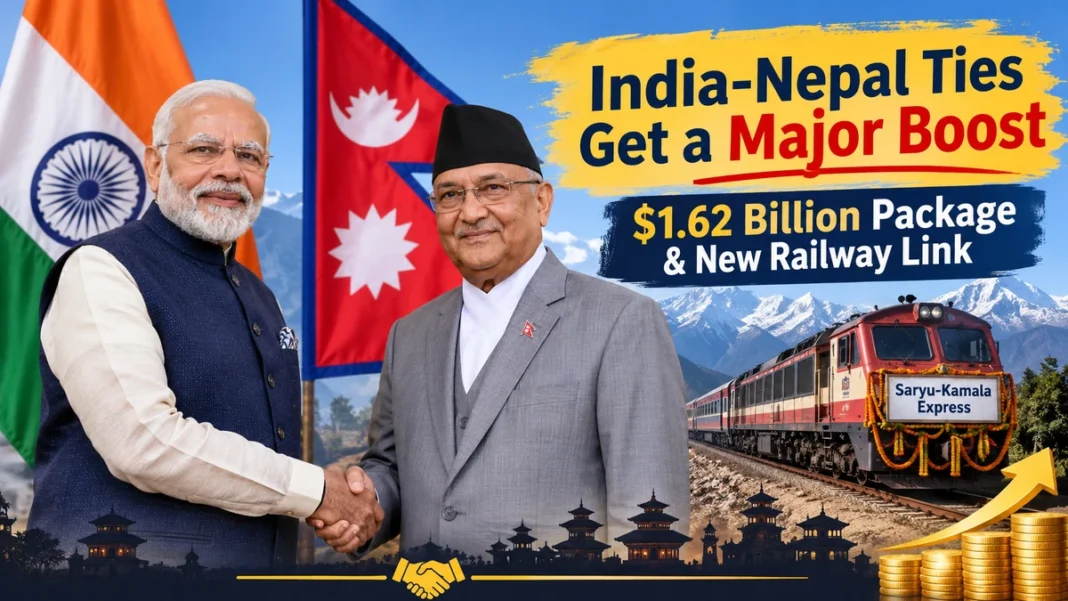
NEW DELHI, November 24, 2026: India has announced a $1.62 billion economic assistance package for Nepal, marking a significant step towards strengthening bilateral relations, rebuilding infrastructure and expanding regional connectivity. The announcement came during Nepalese Prime Minister Balendra Shah’s first bilateral visit to India since taking office in March 2026.
The two countries also signed eight agreements covering education, research, satellite communications and sustainable urban development. The discussions reflect India’s efforts to deepen its economic and strategic partnership with its neighbouring country.
The development comes after devastating floods in Nepal in August 2026 caused widespread destruction, damaged infrastructure and disrupted livelihoods across several regions.
India Announces Financial Assistance for Nepal’s Reconstruction
The $1.62 billion package is designed to support Nepal’s post-disaster reconstruction and long-term development requirements.
According to the announced framework, the assistance includes:
- $377 million in grants: Financial support for reconstruction and infrastructure development.
- $1.24 billion in credit: A line of credit primarily directed towards energy projects and development initiatives.
The assistance is expected to help Nepal rebuild damaged infrastructure, restore essential services and strengthen its energy sector. Specific projects and implementation arrangements will be finalised through consultations between the two governments.
The August floods severely affected Nepal’s infrastructure, including several hydropower projects. The damage reportedly reduced the country’s electricity generation capacity by approximately 10%, disrupting electricity exports and creating additional economic pressure.
Nepal has estimated its overall recovery requirements at nearly 10% of its Gross Domestic Product (GDP), highlighting the scale of the reconstruction challenge.
India, Nepal’s largest trading partner and a major development partner, was among the countries that provided emergency assistance following the disaster.
Saryu-Kamala Express: A New Railway Link Between India and Nepal
One of the major highlights of the visit was the inauguration of the Saryu-Kamala Express, a direct passenger train connecting Ayodhya in Uttar Pradesh with Janakpur Dham in Nepal.
Prime Minister Narendra Modi and Prime Minister Balendra Shah jointly flagged off the service on November 23.
The train will cover approximately 604 kilometres in around 19 hours, passing through important locations in Uttar Pradesh and Bihar before reaching Nepal.
The regular passenger service is scheduled to begin on November 28, operating once a week in each direction.
The railway connection holds particular cultural and religious significance. Ayodhya is associated with the birthplace of Lord Ram, while Janakpur is traditionally regarded as the birthplace of Goddess Sita.
Beyond religious tourism, the railway service is expected to improve cross-border movement, support local businesses and create opportunities for economic exchange between communities along the route.
Eight Agreements to Expand Bilateral Cooperation
India and Nepal also signed eight agreements aimed at expanding cooperation across several sectors.
The agreements cover areas including:
- Education and academic cooperation.
- Scientific research and innovation.
- Satellite communications.
- Sustainable urban development.
- Infrastructure and economic cooperation.
These initiatives are intended to strengthen institutional partnerships and create new opportunities for collaboration between the two countries.
The visit also comes at a time when both countries are looking to strengthen their long-standing relationship through economic cooperation, infrastructure development and improved regional connectivity.
Why Is This Development Important for India?
India and Nepal share an approximately 1,850-kilometre-long open border, along with deep historical, cultural, economic and geographical connections.
Nepal’s geographical position makes it strategically important for India’s neighbourhood policy. Cooperation between the two countries is particularly significant in areas such as hydropower, trade, infrastructure and regional security.
The new financial assistance package could strengthen India’s position as a major development partner for Nepal, while the railway connection provides a practical example of how infrastructure can improve people-to-people relations.
The energy component is particularly important. Nepal has considerable hydropower potential, and stronger cooperation could create opportunities for electricity generation, cross-border energy trade and regional energy security.
However, the success of these initiatives will depend on effective implementation, timely project completion and continued diplomatic engagement.
The Bigger Picture
The latest developments indicate that India-Nepal relations are moving beyond traditional diplomatic engagement towards greater economic and infrastructure cooperation.
From financial assistance for flood reconstruction to railway connectivity and agreements on technology and education, the two countries are attempting to build a broader partnership.
For India, maintaining strong relations with Nepal remains important for regional stability, economic cooperation and its wider neighbourhood strategy.
For Nepal, India’s financial support and infrastructure partnerships could play an important role in reconstruction and long-term development.
The real test, however, will be how effectively both governments translate these announcements into projects that deliver tangible benefits to ordinary citizens.