

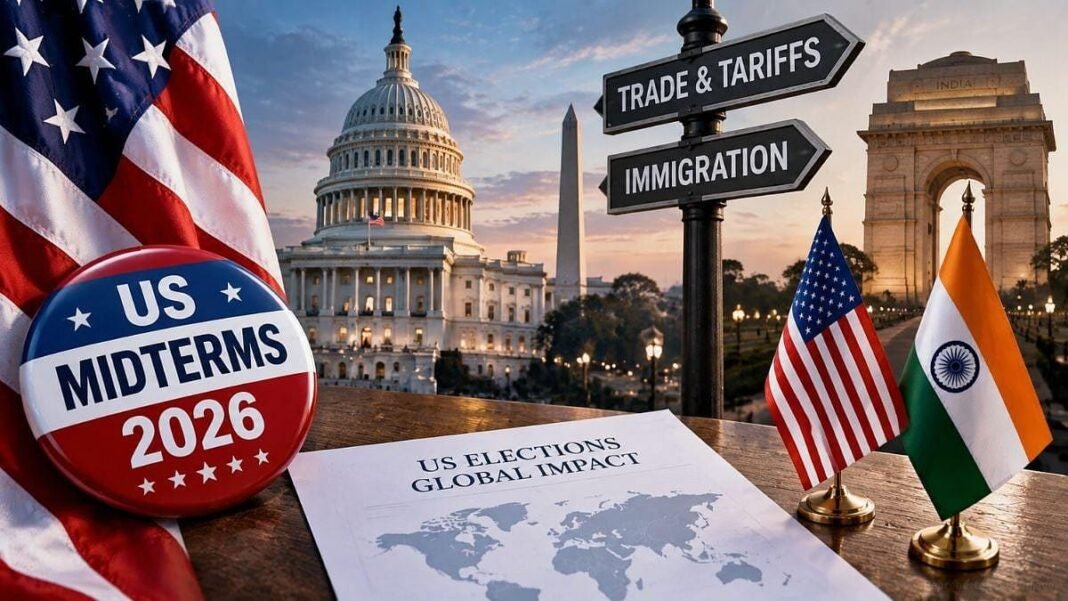
The Democratic Party’s victory in both chambers of the US Congress could reshape Washington’s political balance, influence India-US trade negotiations and bring fresh attention to H-1B visa restrictions, immigration policies and strategic relations between New Delhi and Washington.
NEW DELHI: The United States has witnessed a major political shift following the 2026 midterm elections, with the Democratic Party securing control of both the Senate and the House of Representatives. The results, announced after voting on November 3, have delivered a significant setback to President Donald Trump and his Republican Party.
For India, however, the election outcome is important for reasons beyond American domestic politics. The changing balance of power in Washington could influence several issues directly connected with Indian interests, including bilateral trade, tariffs, immigration, H-1B visas, defence cooperation and India’s strategic position in the Indo-Pacific region.
According to reports published on November 5, New Delhi is closely monitoring the political developments in Washington. The results have also generated discussions about whether a Democratic-controlled Congress could provide greater institutional checks on the Trump administration’s policies towards India.
Democrats Win Both Chambers of US Congress
The Democratic Party achieved a major victory in the November 3 midterm elections, gaining control of both chambers of the US Congress.
According to Reuters, Democrats secured victories in several traditionally Republican strongholds, reflecting voter dissatisfaction with the administration’s economic policies, rising living costs and its handling of the conflict involving Iran.
The result marks a significant change in American politics. For the first time during Trump’s current presidency, his administration will face a Congress controlled by the opposition party.
The new Congress is expected to begin its work in January 2027. Democrats will have greater influence over legislative priorities, congressional investigations, government spending discussions and oversight of the administration.
However, the election result does not remove Trump’s presidential powers. He will continue to control the executive branch and retain the constitutional authority to veto legislation passed by Congress.
Why Is the US Election Important for India?
The United States is one of India’s most important economic and strategic partners. Relations between the two countries extend across trade, technology, education, defence, energy and international security.
Any major political change in Washington can therefore have consequences for New Delhi.
Over the past year, India-US relations have faced several challenges, particularly over trade tariffs, Russian oil purchases and immigration restrictions.
The Democratic victory could provide India with additional opportunities to engage with American lawmakers and raise concerns about policies affecting Indian businesses, professionals and students.
However, India is unlikely to expect an immediate change in American policy. The government will need to work with both political parties to protect its long-term strategic interests.
1. India-US Trade Deal and Tariffs
Trade is one of the most important areas that India will be watching after the US midterm elections.
The United States is a major destination for Indian exports, including pharmaceuticals, textiles, engineering goods, information technology services and other manufactured products.
Changes in American tariff policies can directly affect Indian exporters, manufacturers and businesses.
The two countries have been working towards an interim trade agreement and a broader bilateral trade arrangement. However, negotiations have faced difficulties over market access, tariffs and differences in economic priorities.
A Democratic-controlled Congress could increase scrutiny of the administration’s trade policies and create more debate about the economic impact of tariffs.
For India, the key question will be whether the new political balance creates opportunities for more predictable and mutually beneficial trade arrangements.
New Delhi will also seek to protect domestic industries and ensure that any agreement provides fair opportunities for Indian businesses.
2. H-1B Visa Rules and Indian Professionals
Immigration is another major issue for India following the election results.
Thousands of Indian professionals work in the United States, particularly in the technology, healthcare, engineering and research sectors.
The Trump administration’s stricter immigration approach and changes affecting H-1B visa applicants have created concerns among Indian professionals and companies that depend on skilled international workers.
A Democratic-controlled Congress could increase scrutiny of immigration restrictions and encourage discussions about the contribution of skilled immigrants to the American economy.
It could also provide Indian representatives with more opportunities to raise concerns about visa processing, work restrictions and the treatment of Indian professionals.
Nevertheless, a change in congressional control does not automatically mean that existing visa regulations will be withdrawn. Any major change would depend on legislation, administrative decisions and legal procedures.
3. Indian Students and Education Opportunities
The election outcome is also relevant for Indian students planning to study in the United States.
America remains an important destination for Indian students pursuing higher education, research and professional development.
Changes in student visa policies, immigration rules and post-study work opportunities can influence their academic and career decisions.
A Democratic majority may bring greater congressional attention to immigration and education-related issues. However, students should not assume that the election results will immediately change visa requirements or guarantee additional work opportunities.
The future direction of American education and immigration policies will depend on decisions taken by the administration and Congress.
4. Defence Cooperation and Strategic Partnership
India and the United States have expanded their defence and strategic cooperation over the past two decades.
Both countries share interests in maintaining stability in the Indo-Pacific region, strengthening maritime security and expanding cooperation in emerging technologies.
The changing political balance in Washington could influence discussions on defence budgets, military cooperation, technology transfers and regional security.
For India, maintaining strong relations with both Democrats and Republicans will remain important.
Bipartisan support for the India-US partnership has historically been an important factor in maintaining continuity despite changes in American political leadership.
5. India’s Diplomatic Strategy: Why New Delhi Must Remain Cautious
Despite the Democratic victory, India is expected to follow a balanced diplomatic approach.
According to an Economic Times report published on November 5, people familiar with the Indian government’s assessment said New Delhi was taking a calm and measured view of the election results.
India does not consider the change in congressional control a fundamental threat to bilateral relations. The expectation is that bipartisan support for India-US ties will continue to provide stability.
This approach is important because India’s relationship with the United States is based on long-term economic, technological and strategic interests rather than the political fortunes of one party.
New Delhi will therefore need to maintain communication with both political parties while protecting its independent foreign policy priorities.
Can Democrats Change Trump’s Policies?
Although Democrats now control both chambers of Congress, their victory does not give them complete control over American policymaking.
President Trump remains in office and retains executive authority over several areas, including foreign policy and national security.
The President can also veto legislation passed by Congress. Overriding a presidential veto generally requires a two-thirds majority in both chambers.
This means that Democrats may be able to investigate policies, influence legislation, question government decisions and create political pressure, but they cannot automatically reverse every decision made by the administration.
For India, the practical impact of the election will become clearer as the new Congress begins its work in January 2027.
What Lies Ahead for India-US Relations?
The 2026 US midterm election results have created a new political environment in Washington.
For India, the development presents both opportunities and uncertainties. Greater congressional scrutiny could influence discussions on trade tariffs, immigration restrictions and the administration’s foreign policy decisions.
At the same time, India’s strategic partnership with the United States is supported by shared economic interests, defence cooperation, technology partnerships and people-to-people connections.
The immediate priority for New Delhi will be to maintain diplomatic engagement with both sides of American politics and ensure that important bilateral issues remain on the agenda.
Conclusion
The Democratic Party’s victory in the 2026 US midterm elections marks a major shift in American politics and creates a new challenge for President Donald Trump during the remaining two years of his term.
For India, the outcome is particularly significant because decisions taken in Washington can affect Indian exports, skilled professionals, students and strategic interests.
However, the change in congressional control should not be viewed as an automatic transformation of US policy towards India.
The coming months will reveal whether the new political balance creates meaningful progress in trade negotiations, immigration discussions and bilateral cooperation.
For New Delhi, the message remains clear: maintain strong relations with Washington, engage with both political parties and put India’s national interests first.


