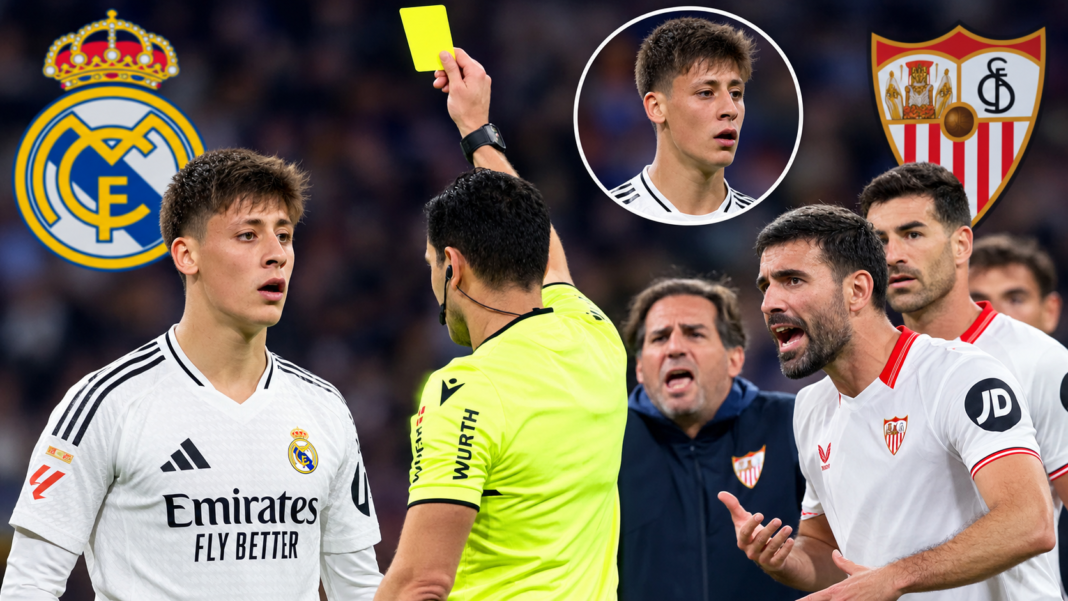
Real Madrid have once again found themselves at the centre of a refereeing debate following a controversial incident involving Turkish midfielder Arda Güler. The episode has drawn attention to the decisions made during the match against Sevilla and raised questions about how key moments are interpreted by match officials.
Refereeing decisions remain one of the most closely watched aspects of Spanish football, particularly when they involve major clubs such as Real Madrid and Sevilla. Even a single disputed call can become a significant talking point when players, coaching staff and supporters disagree over how an incident should have been handled.
Arda Güler Incident Draws Attention
Arda Güler, who has attracted considerable attention for his technical ability and attacking potential, is the central figure in the latest discussion. The incident involving the Real Madrid player has prompted renewed interest in the referee’s decision and its possible implications for the game.
However, the precise details of the incident, including the referee’s official explanation and whether a formal complaint was submitted by Sevilla, require confirmation from reliable match reports or official statements. Without that information, it would be premature to describe the decision as an established refereeing error.
The distinction is important because controversial moments can be interpreted differently depending on the available camera angles, the referee’s position and the applicable Laws of the Game.
Why Sevilla’s Reaction Matters
Sevilla are among the established clubs in Spanish football and have regularly faced Real Madrid in competitive domestic fixtures. When a disputed decision occurs in a match involving the two sides, it can quickly become a wider discussion about consistency and accountability in refereeing.
If Sevilla’s officials or players have formally questioned the decision involving Güler, their specific concerns would be important in understanding the controversy. Any assessment should distinguish between an immediate reaction during the match, criticism expressed after the final whistle and a formal complaint to the relevant football authorities.
That distinction helps provide a clearer picture of whether the disagreement concerns the interpretation of a particular incident, the consistency of the referee’s decisions or the use of video assistant referee technology.
Refereeing Decisions Remain Under Scrutiny
Spanish football has frequently witnessed debates over penalties, handball decisions, disciplinary action and the use of VAR. Such discussions are not limited to any one club and often intensify when the outcome of a match could affect league positions or a team’s broader campaign.
VAR is intended to help officials review certain major incidents, including goals, penalty decisions, direct red cards and cases of mistaken identity. However, its involvement does not eliminate every disagreement. Some decisions depend on the referee’s interpretation of the rules, while others require clear evidence that a serious error has occurred.
In the case involving Güler, the key questions are what happened during the incident, whether the referee reviewed it and whether an official explanation has been made available. Those details are necessary before drawing conclusions about the correctness of the decision.
What Happens Next?
The incident could remain a talking point among football observers if further footage, an official statement or a detailed match report clarifies the circumstances. Any confirmed response from Sevilla, Real Madrid or the relevant refereeing authorities would provide additional context.
For now, the episode highlights the continuing debate surrounding refereeing standards in high-profile Spanish football matches. While disputed decisions are an inevitable part of the game, accurate reporting requires separating confirmed facts from reactions and speculation.
The focus will remain on the precise nature of the Arda Güler incident and whether any official explanation emerges. Until those details are verified, the controversy should be treated as a developing story rather than proof of an incorrect decision.