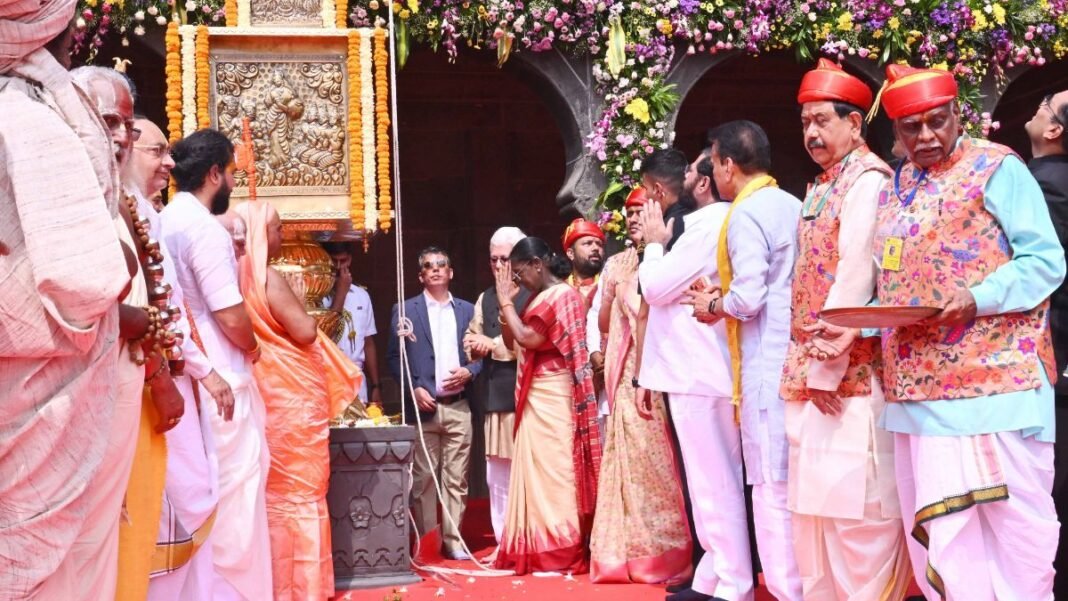
President Droupadi Murmu participated in the flagpole consecration, flag worship and flag-hoisting ceremony for the upcoming Simhastha Mahakumbh in Nashik, Maharashtra. The religious ceremony at Trimbakeshwar marks an important step in preparations for the major Hindu gathering.
President Droupadi Murmu Takes Part in Sacred Ceremony at Trimbakeshwar
President of India Droupadi Murmu participated in a religious ceremony connected with the upcoming Simhastha Mahakumbh in Nashik, Maharashtra. The President attended the flagpole consecration, flag worship and flag-hoisting ceremony organised at Kushavart Tirth in Trimbakeshwar.
Her participation brought national attention to the preparations for one of the major religious gatherings in India. The ceremony was organised as part of the traditional activities associated with the upcoming Simhastha Mahakumbh, which will be held in Nashik and Trimbakeshwar.
The event holds religious and cultural importance for devotees, saints and followers of Hindu traditions. The flag-hoisting ceremony is an important ritual that reflects the beginning of a series of religious preparations connected with the gathering.
President Participates in Traditional Religious Rituals
During the programme, President Murmu took part in three important activities: flagpole consecration, flag worship and the hoisting of the religious flag.
These rituals carry symbolic importance in Hindu religious traditions. The consecration ceremony is associated with prayers and religious practices, while flag worship represents devotion, faith and the spiritual significance of the occasion.
The flag-hoisting ceremony also serves as a symbolic announcement of the upcoming religious event. It brings together traditional customs and preparations for the large gathering expected in the Nashik region.
The President’s participation highlighted the importance of India’s religious traditions and cultural heritage. Her presence at the ceremony also reflected the significance of Trimbakeshwar as an important centre of Hindu pilgrimage.
Why Is Nashik Simhastha Mahakumbh Important?
The Simhastha Mahakumbh is among the most significant religious gatherings in Hinduism. It is associated with ancient traditions, spiritual beliefs and sacred bathing rituals.
Nashik and Trimbakeshwar hold a special place in the religious history of the Kumbh tradition. The Godavari River, which is closely connected with the region’s religious identity, plays an important role in the spiritual activities associated with the gathering.
Thousands of devotees visit the area during the Kumbh period to participate in religious ceremonies, offer prayers and take part in sacred bathing rituals.
The gathering also attracts sadhus, saints, religious leaders and pilgrims from different parts of India. For many devotees, attending the Kumbh is considered an important spiritual experience.
Trimbakeshwar is particularly significant because of the famous Trimbakeshwar Jyotirlinga Temple, one of the twelve revered Jyotirlingas dedicated to Lord Shiva.
The presence of Kushavart Tirth further strengthens the religious importance of the location. The sacred water body is traditionally associated with the origin of the Godavari River and is an important pilgrimage destination.
Trimbakeshwar Holds Special Religious Significance
Trimbakeshwar is one of Maharashtra’s most respected pilgrimage destinations. Located in the Nashik district, the town is known for its religious heritage, ancient temples and connection with the Godavari River.
The Trimbakeshwar Temple is dedicated to Lord Shiva and is visited by devotees throughout the year. During the Simhastha Mahakumbh, the region receives special attention because of its association with traditional Kumbh celebrations and sacred bathing practices.
Kushavart Tirth is another important religious site in the town. Devotees consider it a sacred place for taking a holy bath and performing religious rituals.
The selection of this location for the flag-related ceremony underlines the spiritual connection between the upcoming Mahakumbh and the religious heritage of Trimbakeshwar.
Religious Preparations Bring Attention to Maharashtra
The upcoming Simhastha Mahakumbh is expected to bring a large number of pilgrims to Nashik and surrounding areas. Such major religious gatherings require extensive preparations, including arrangements for devotees, transport, security, sanitation, accommodation and crowd management.
Local administration and other concerned authorities generally play an important role in managing the arrangements for events of this scale.
The religious programme also draws attention to the importance of preserving traditional pilgrimage sites and maintaining facilities for visitors. As preparations progress, infrastructure and public services will remain important areas of focus.
For Maharashtra, the Mahakumbh is not only a major religious occasion but also an important cultural event. It brings together people from different states, communities and spiritual traditions.
The gathering provides an opportunity for devotees to connect with religious practices that have been followed across generations.
President’s Participation Highlights India’s Cultural Heritage
President Droupadi Murmu’s participation in the ceremony reflects the national importance of India’s religious and cultural traditions.
India is home to several ancient pilgrimage centres, temples and religious gatherings that continue to attract millions of people. Events such as the Simhastha Mahakumbh represent the country’s long-standing cultural heritage and the role of faith in public life.
The President’s presence at Trimbakeshwar also brought attention to Maharashtra’s religious identity and the importance of the Nashik region in the Kumbh tradition.
The flag-hoisting ceremony marks a significant moment in the preparations for the upcoming Simhastha Mahakumbh. With the traditional rituals completed, attention will increasingly turn towards the arrangements required for the gathering.
As Nashik and Trimbakeshwar prepare to welcome pilgrims, the upcoming Mahakumbh is expected to remain an important event on India’s religious and cultural calendar.
Preparations for the Upcoming Simhastha Mahakumbh
The flagpole consecration and flag-hoisting ceremony represent an important traditional milestone in the preparations. Further arrangements for the Mahakumbh will involve religious programmes, coordination between authorities and facilities for the expected pilgrims.
The upcoming gathering will once again bring the religious significance of Nashik, Trimbakeshwar and the Godavari River into national focus.
President Murmu’s participation has added significance to the occasion, highlighting the connection between India’s cultural traditions and its continuing religious heritage.