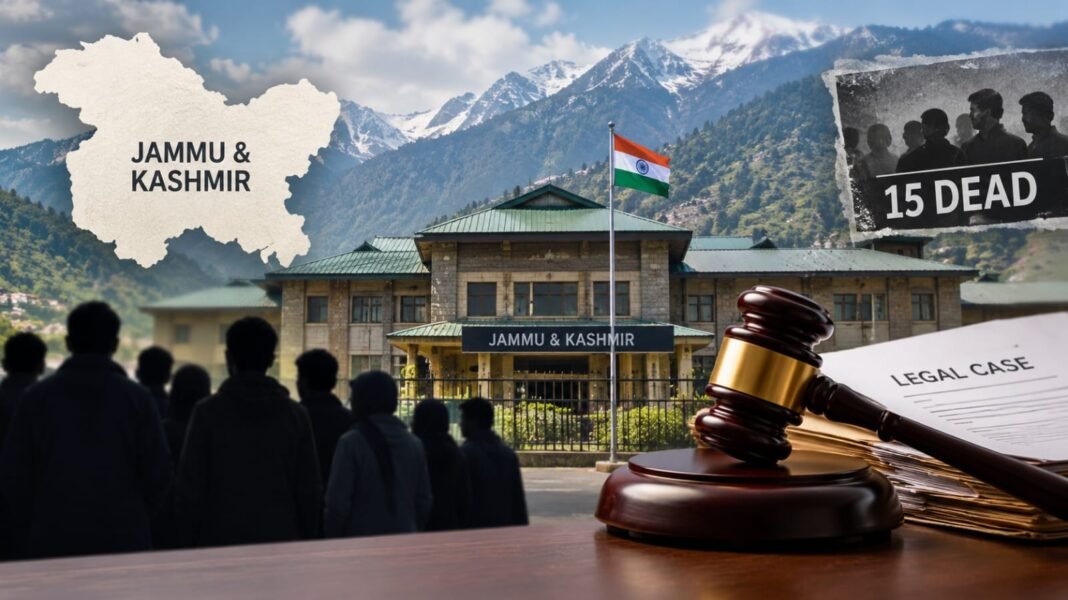
Authorities in Jammu and Kashmir have reportedly initiated legal proceedings against 65 people over allegations of illegal stay in the region. Of these, 15 people are reportedly dead. The case has drawn attention to long-pending legal proceedings, the verification of old records and the challenges authorities face when cases remain unresolved for decades.
A Decades-Old Case Comes Under Focus
Legal proceedings have reportedly been initiated against 65 people in Jammu and Kashmir over allegations of illegal stay, with 15 of those named in the case said to have died. The matter has drawn attention because the proceedings relate to people who have reportedly been living in the region for decades.
The case highlights the difficulties that can arise when legal matters remain pending for a long time. It also raises questions about how authorities verify old records, establish the status of individuals named in cases and handle proceedings when some of the people involved are no longer alive.
What Are the Allegations?
The reported case concerns allegations of illegal stay in Jammu and Kashmir. However, the exact period during which the alleged violations took place, the legal provisions involved and the circumstances of the individuals named in the case require confirmation from official records.
Long-pending cases can be complicated because documents may be old, records may be incomplete and the status of the people involved may have changed over time. Authorities may need to examine historical documents and other relevant evidence before deciding how the matter should proceed.
The term illegal stay can have a specific legal meaning depending on the circumstances and the law under which a case has been registered. Therefore, the allegations should not be treated as proof that all the individuals named in the case committed an offence.
15 of the 65 People Reportedly Dead
One of the most significant details in the report is that 15 of the 65 people named in the case are reportedly dead.
The reported deaths could create additional legal and administrative challenges. Authorities may need to verify the identities and death records of the individuals concerned before determining the appropriate next steps in each case.
The legal position can depend on the nature of the proceedings and the specific law involved. Criminal proceedings against a deceased accused person generally cannot continue in the same manner as proceedings against a living person. However, the precise legal consequences in this particular case must be established from the relevant court records and applicable law.
The remaining cases may require separate examination based on the evidence available, the legal status of each individual and any directions issued by the competent authority or court.
Why Old Records Could Be Important
Cases involving allegations that date back many years often require careful examination of official documents. Authorities may need to establish when the alleged illegal stay began, what records were available at the time and whether the individuals concerned had any legal permission or other recognised basis for remaining in the region.
Accurate records are particularly important when a case involves a large number of people. Each person’s circumstances may be different, meaning that the allegations and available evidence should be examined individually rather than treated as a single uniform case.
The passage of time can also make it difficult for individuals or their families to obtain old documents and respond to allegations. This makes proper verification and compliance with legal procedures essential.
What Happens Next in the Case?
The next steps will depend on the official status of the cases, the relevant legal provisions and any decisions taken by the authorities or courts handling the matter.
The reported figures alone do not establish whether charges have been formally framed by a court, whether all 65 cases remain active or whether any proceedings have already been closed.
Further details from official statements, court documents or reliable reporting would be needed to establish the identities of the people involved, the dates of the alleged violations and the precise action taken by the authorities.
Legal Process and Fair Treatment Remain Key
The case underlines the importance of timely legal proceedings, reliable record-keeping and fair treatment under the law. It also shows why old cases require particular care when the individuals involved may have died or their circumstances have changed substantially.
Until the relevant records are examined, the allegations should be described as allegations, and no individual should be considered guilty solely because their name appears in a reported case.