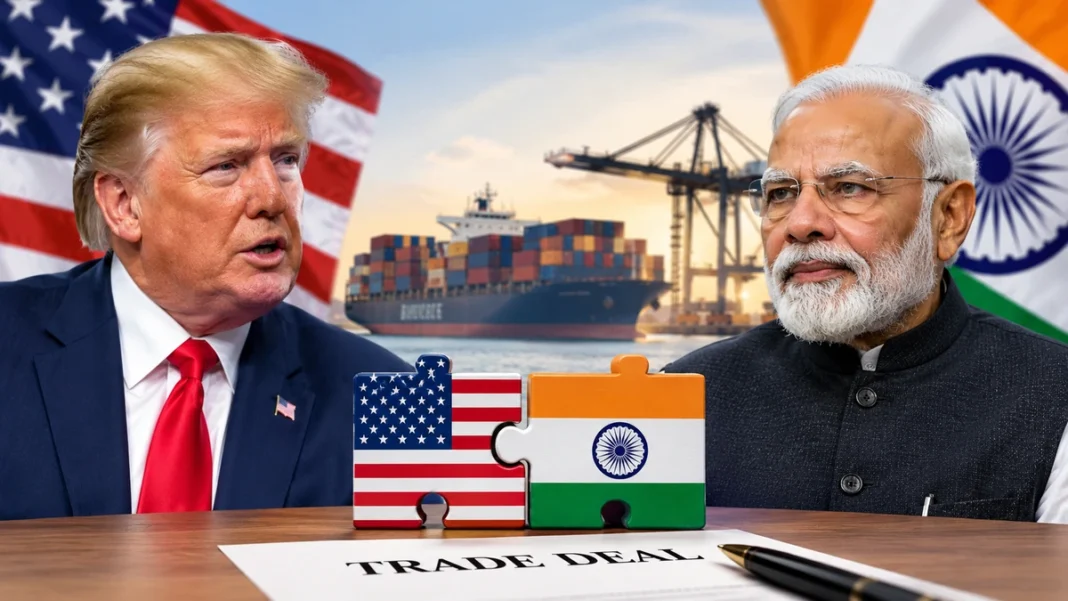
New Delhi, October 21, 2026: US President Donald Trump has said that India and the United States are close to reaching a trade agreement, adding that the proposed deal could be “a much different kind of deal” from previous agreements. His remarks have renewed expectations of progress after months of negotiations between the two countries.
Speaking to reporters at the White House on Tuesday, Trump said both countries wanted an agreement and expressed confidence that a deal could be reached soon. However, he did not explain how the proposed agreement would differ from earlier trade arrangements or provide a specific timeline for its conclusion.
The comments come amid renewed diplomatic engagement between New Delhi and Washington, with trade, energy, technology and defence cooperation featuring prominently in discussions between officials from both countries.
India-US Trade Talks Gain Momentum
The latest statements from Trump follow similar expressions of optimism from senior officials. US Secretary of State Marco Rubio said on Tuesday that Washington and New Delhi were very close to finalising a trade agreement. During his visit to India, Rubio held discussions with External Affairs Minister S. Jaishankar on strengthening bilateral cooperation.
India’s Commerce and Industry Minister Piyush Goyal has also indicated progress, stating earlier this month that the first phase of the bilateral trade agreement had been finalised and was undergoing legal drafting.
Despite these developments, the broader agreement remains subject to further negotiations and formalisation. The difference between completing an initial framework and signing an enforceable trade agreement remains important for businesses awaiting clarity on tariffs and market access.
Tariffs Remain a Major Point of Discussion
Tariffs have been among the most significant obstacles in the negotiations. In February 2026, India and the United States announced a framework for an interim trade agreement intended to improve reciprocal market access and advance negotiations towards a broader bilateral trade agreement.
Under the announced framework, the United States agreed to apply an 18 per cent reciprocal tariff rate to covered Indian goods, subject to the terms of the arrangement. The framework also outlined potential tariff adjustments for selected Indian products, alongside commitments by India to reduce or eliminate tariffs on various American industrial and agricultural goods.
However, disagreements over market access, trade barriers and the terms of a final agreement have continued to complicate negotiations. India has sought more favourable conditions for its exporters, while Washington has pushed for greater access to the Indian market.
Russian Oil Dispute Adds to Trade Uncertainty
Energy policy has emerged as another important factor affecting the negotiations. India’s purchases of Russian oil have created tensions with Washington, particularly following US efforts to use tariffs and sanctions-related measures to pressure countries buying Russian energy.
On October 16, Trump issued an executive order waiving certain Russia-related sanctions and tariffs that had threatened to affect countries purchasing Russian oil and gas. The move has eased some immediate concerns for India and could provide additional room for trade negotiations.
Rubio subsequently indicated that the administration had taken the progress of trade discussions into account when considering the waiver. The development suggests that trade and energy policy remain closely connected in the broader relationship between the two countries.
What the Proposed Deal Could Mean for India
A successful agreement could improve access to the American market for Indian exporters, particularly in sectors such as textiles, apparel, leather goods, chemicals and machinery. More predictable tariff arrangements could also help businesses plan investments, strengthen supply chains and compete more effectively with exporters from other countries.
For the United States, improved access to India’s large consumer market could create opportunities for industrial goods, agricultural products, energy supplies and technology exports. Both governments have also expressed interest in expanding cooperation in advanced technologies and strengthening economic ties.
However, the final impact will depend on the agreement’s precise terms, including tariff rates, exemptions, market-access commitments and implementation timelines. Indian businesses will need to assess the actual provisions rather than rely solely on optimistic political statements.
A Deal Is Close, but Final Details Matter
Trump’s latest comments signal renewed confidence in the negotiations, while statements from Rubio and Indian officials suggest that progress has been made on the initial phase of the agreement. Nevertheless, unresolved trade issues and the need to complete formal procedures mean that a final outcome cannot yet be taken for granted.
The coming weeks could prove significant for both countries as they attempt to translate diplomatic momentum into a concrete agreement. Whether the proposed deal becomes the “much different” arrangement Trump described will ultimately depend on its final terms and the concessions both sides are prepared to accept.