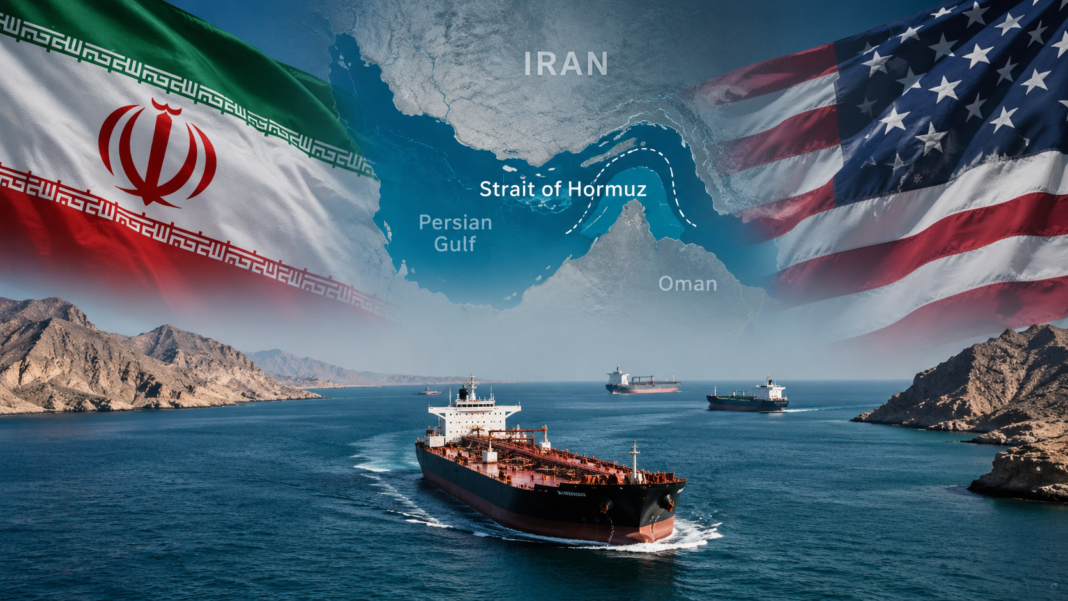
Iran has urged the United States to accept its proposal to reopen the strategically important Strait of Hormuz within seven days, as tensions between the two countries continue over sanctions, regional security and Iran’s nuclear programme.
Iranian Foreign Minister Abbas Araqchi said on Sunday, October 18, that Tehran’s proposal remained under consideration. Under the plan, the strait could reopen within six days if Washington accepts Iran’s conditions, with negotiations expected to resume on the seventh day.
However, disagreements between the two countries continue to create uncertainty over whether the proposal will move forward.
Iran Sets Conditions for Reopening the Strait
Iran has linked the reopening of the Strait of Hormuz to several demands, including lifting the US blockade on Iranian ports, removing sanctions on Iranian oil exports and ending hostilities across regional fronts.
Tehran believes these steps could help restore maritime security and create an opportunity for renewed diplomatic negotiations.
Araqchi said Iran had received comments from Washington regarding its proposal. However, the two sides have yet to reach an agreement on the conditions required to move forward.
The proposal was presented in mid-September following the collapse of an interim ceasefire. Despite renewed diplomatic efforts, negotiations have remained stalled over differences in the demands put forward by both countries.
Iran has maintained that the reopening of the waterway should be an immediate priority, while the United States wants broader security concerns to be addressed as part of any agreement.
Nuclear Programme Remains a Major Point of Disagreement
Iran’s nuclear programme continues to be one of the biggest obstacles to an agreement.
Washington has insisted that Iran’s nuclear activities must be discussed from the beginning of negotiations. The United States has also called for a significant reduction in Iran’s uranium enrichment capacity.
Tehran, however, wants discussions to initially focus on reopening the Strait of Hormuz, easing restrictions and restoring security in the region.
These competing priorities have complicated efforts to restart talks. While Iran is seeking relief from economic pressure and restrictions on its ports, the United States wants assurances regarding Iran’s nuclear activities.
Whether both sides can agree on a common framework remains uncertain.
Why the Strait of Hormuz Is Important
The Strait of Hormuz connects the Persian Gulf with the Gulf of Oman and the Arabian Sea. It is one of the world’s most important routes for transporting oil and liquefied natural gas.
Before the conflict, approximately one-fifth of global oil and liquefied natural gas trade passed through the narrow waterway.
Any prolonged disruption can affect international energy supplies, shipping costs and global oil prices. Countries that depend heavily on imported energy are particularly vulnerable to uncertainty surrounding the route.
India also has a significant interest in the situation because it relies heavily on imported crude oil. Disruptions to shipments could increase import costs and put pressure on domestic fuel prices, depending on global market conditions and the availability of alternative supplies.
The reopening of the strait could therefore help ease concerns over energy security and restore greater stability to international shipping.
Will the Strait of Hormuz Reopen Soon?
Iran’s seven-day proposal has created a possible path towards renewed negotiations, but its implementation depends on whether Washington accepts Tehran’s conditions.
The two countries remain divided over sanctions, regional hostilities and the future of Iran’s nuclear programme. These differences have prevented a clear breakthrough despite continued diplomatic efforts.
As of October 18, no final agreement confirming the reopening of the Strait of Hormuz had been announced.
The coming days could prove important in determining whether the proposal leads to renewed talks or whether tensions continue. Until both sides reach an understanding, uncertainty surrounding the waterway is likely to remain a concern for regional security, international shipping and global energy markets.