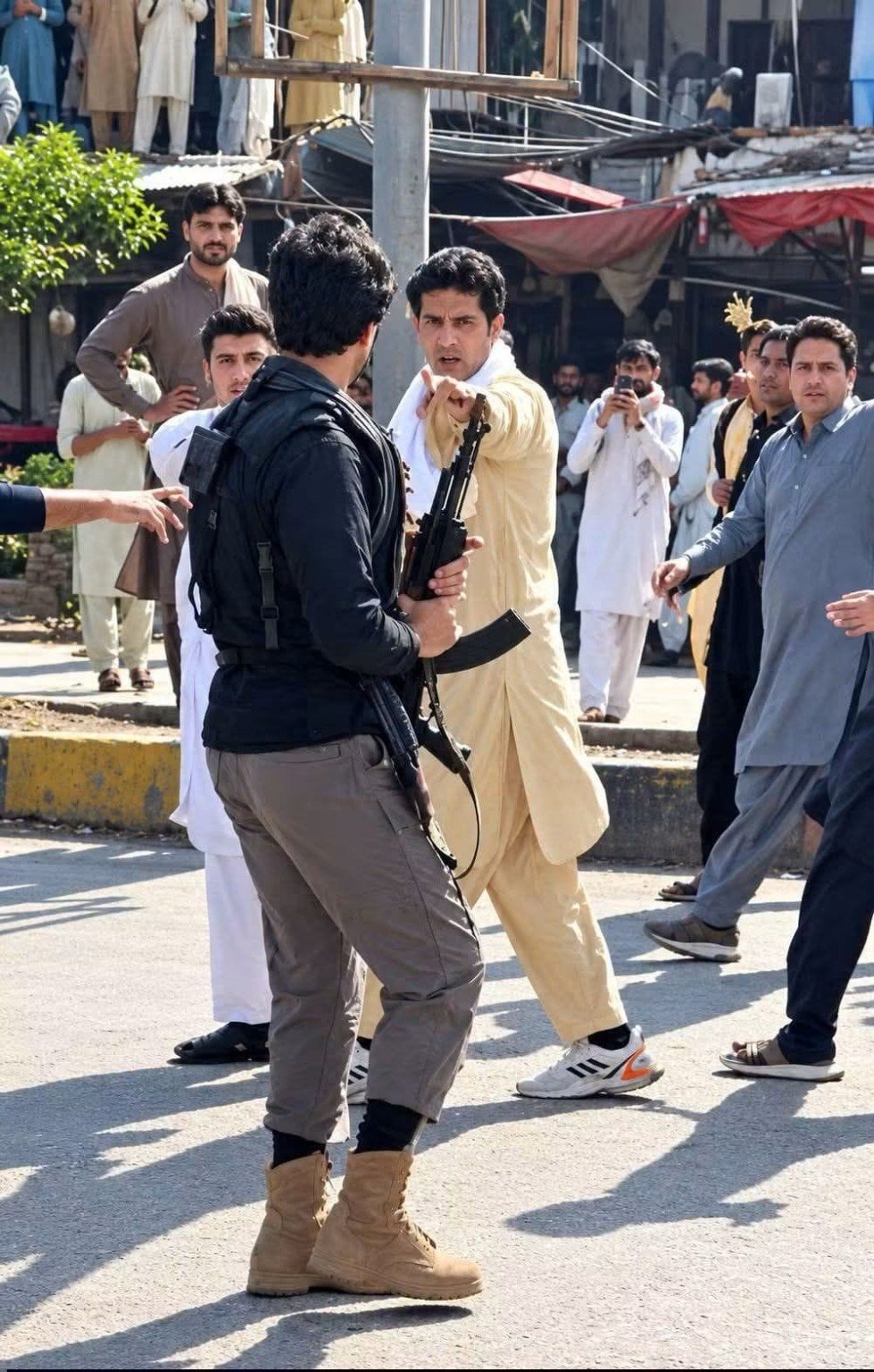
The suspension of an elected provincial government, detentions of PTI leaders and reports of police firing raise urgent questions about political freedom in Pakistan’s Democracy —and whether international human rights scrutiny is sufficiently swift and consistent.
By Global Nexus Media | World Affairs
When emergency powers threaten democratic choice
Pakistan’s Democracy latest political crisis raises a question that no democracy can afford to ignore: when a government invokes national security to restrict its political opponents, who ensures that the people’s fundamental rights remain protected?
On October 11–12, 2026, Pakistan imposed emergency rule in Khyber Pakhtunkhwa, suspended the provincial government led by Imran Khan’s Pakistan Tehreek-e-Insaf (PTI), and detained senior provincial figures, according to Reuters and the Associated Press. The federal government defended the move by citing the worsening militant threat. PTI rejected that explanation and described the intervention as an attempt to suppress its political movement. Reuters | AP
The security situation in Pakistan is serious. Militancy cannot be dismissed, and governments have a responsibility to protect citizens from attacks. But national security must not become a blank cheque for political repression. Extraordinary constitutional powers require transparent justification, lawful implementation and independent scrutiny.
When an elected provincial administration is suspended immediately before a major opposition march, the timing demands particularly careful examination.
The protest footage deserves independent scrutiny

PTI Khyber Pakhtunkhwa’s official account and other accounts shared by the reporter have circulated material connected to the unfolding confrontation. The supplied posts include:
- PTI Khyber Pakhtunkhwa — post 1
- PTI Khyber Pakhtunkhwa — post 2
- Abdulghani — supplied post
- Nasir Khan — supplied post
- Zikrullah — supplied post
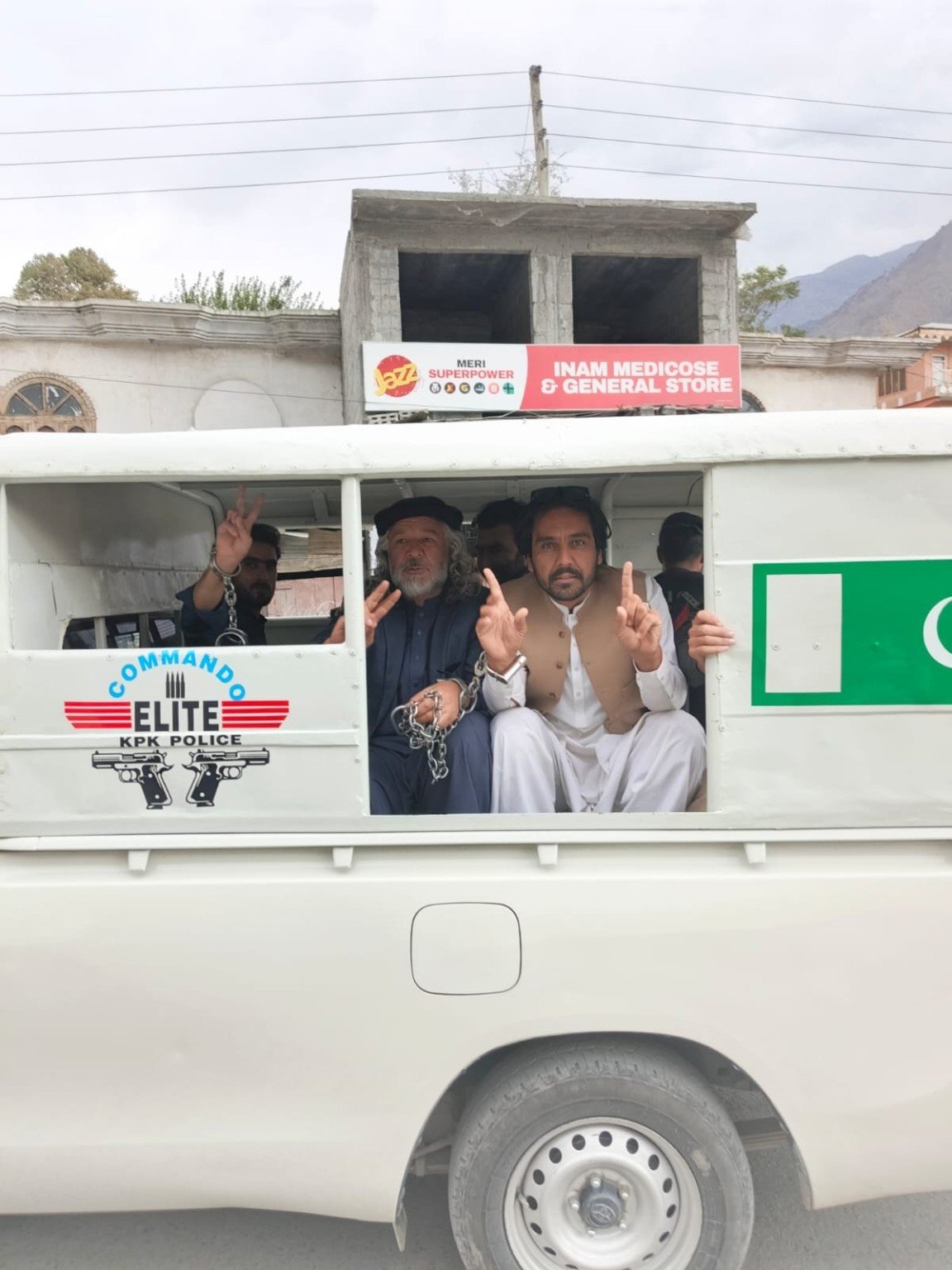
These posts should be examined alongside the video material and reporting supplied for this article. The X pages could not be independently opened during our verification process, so the precise date, location, identities and circumstances shown in each clip should not be treated as conclusively established by this article alone.
However, Reuters has independently reported that police fired shots into the air to disperse crowds in Peshawar and the nearby Khyber district. Reuters also reported arrests amid the confrontation. This supports the conclusion that force was used during the unrest, but it does not, by itself, establish that police directly shot peaceful protesters in the specific videos circulating online. Reuters, October 12, 2026
That distinction matters. Serious allegations deserve serious investigation—not exaggeration, dismissal or political convenience.
If peaceful demonstrators were fired upon, assaulted or unlawfully detained, the authorities must explain who ordered the action, what level of force was used and whether an independent investigation will follow.
A disturbing pattern of democratic pressure Pakistan’s Democracy
The current confrontation did not emerge in isolation. Khan has been imprisoned since 2023, and PTI has repeatedly accused Pakistan’s powerful establishment of using state institutions to weaken the party. The authorities deny that their actions are politically motivated and cite criminal cases, security concerns and the need to contain militancy.
The Guardian’s reporting on October 12 described the suspension of the PTI-led provincial government as a sharp escalation in the standoff. Al Jazeera’s explainer on the emergency measures also highlighted questions about the constitutional basis and scope of federal control over the province. The Guardian | Al Jazeera
A state may lawfully act against terrorism. But a government’s claim that its opponents are failing on security cannot substitute for public evidence, legal review and accountability. Nor should the political identity of demonstrators determine whether they deserve protection from unlawful violence.
When security powers, preventive detention and restrictions on political activity converge, the risk is that emergency governance begins to undermine the very democratic institutions it claims to protect.
Where is the urgent human rights scrutiny?
International human rights institutions must apply their principles consistently, including when allegations concern a government that is politically difficult, strategically important or outside the immediate attention of international audiences.Pakistan Erupts Again!
The Office of the UN High Commissioner for Human Rights (OHCHR) has previously raised concerns about Pakistan-related rights issues. In July 2026, the UN human rights office called for impartial investigations into deaths and raised concerns about arrests, restrictions on gatherings, internet access and due process in Pakistan-administered Kashmir. Its special procedures have also addressed allegations involving the treatment of PTI supporters and other political figures. OHCHR, July 2026 | UN Special Procedures communication on Pakistan
Therefore, it would be inaccurate to claim that the UN has never scrutinised Pakistan. The more pressing question is whether international monitoring is responding promptly and specifically to the current allegations surrounding the PTI march, emergency rule and reported use of force.
Has OHCHR publicly addressed these particular incidents? Has it sought clarification from Pakistani authorities? Will it call for independent investigation if evidence substantiates unlawful force or arbitrary detention?
These are legitimate questions, and the relevant institutions should answer them clearly. Human rights bodies cannot expect public confidence if their response appears slower or less visible when allegations concern powerful state institutions.
The same standard must apply everywhere: India, Pakistan and every other country. Human rights are not a diplomatic instrument to be activated selectively.
India’s perspective: security cannot erase civil liberties
From an Indian perspective, instability in Pakistan is not merely a neighbouring country’s domestic problem. Pakistan’s security environment, political instability and militancy have implications for regional peace and security. But India’s strongest argument is not that the rights of Pakistani citizens matter less because of their nationality. It is that fundamental rights must apply universally.
India can firmly oppose terrorism while insisting that peaceful political participation, lawful detention and due process are not optional. A government that invokes security must still demonstrate that its actions are necessary, proportionate and subject to the law.
The same principle applies to Pakistan. Its people should not have to choose between protection from terrorism and protection from arbitrary state power. They deserve both.
For Indian policymakers and observers, the unfolding crisis also reinforces the importance of distinguishing between Pakistan’s people and the decisions of its government and security institutions. Ordinary citizens and peaceful protesters should not be treated as responsible for every action taken in their country’s name.
A warning against rule by emergency
The suspension of an elected government, the detention of opposition figures and reports of force against demonstrators create a troubling democratic test for Pakistan. The federal government must provide credible evidence for its emergency measures, disclose the legal basis for detentions and permit independent scrutiny of any alleged excessive force.
PTI, for its part, must ensure that its mobilisation remains peaceful and that its own claims are supported by verifiable evidence. Accountability is not a one-sided principle.
International human rights institutions should publicly clarify whether they are examining the latest allegations and what steps, if any, they are taking. Silence on a specific incident should not be assumed without evidence—but neither should scrutiny be considered sufficient simply because a statement was issued about a different event months earlier.
Pakistan’s government may describe its actions as necessary for security. Its critics may call them authoritarian. The decisive test is whether the actions withstand constitutional, judicial and independent human rights scrutiny.
A democracy is measured not only by how it treats its supporters, but by how it treats its critics. Emergency powers must not become a substitute for public consent, and national security must never be an excuse for impunity.
Global Nexus Media will continue to follow verified developments, the treatment of detained political figures and any response from relevant human rights institutions.