

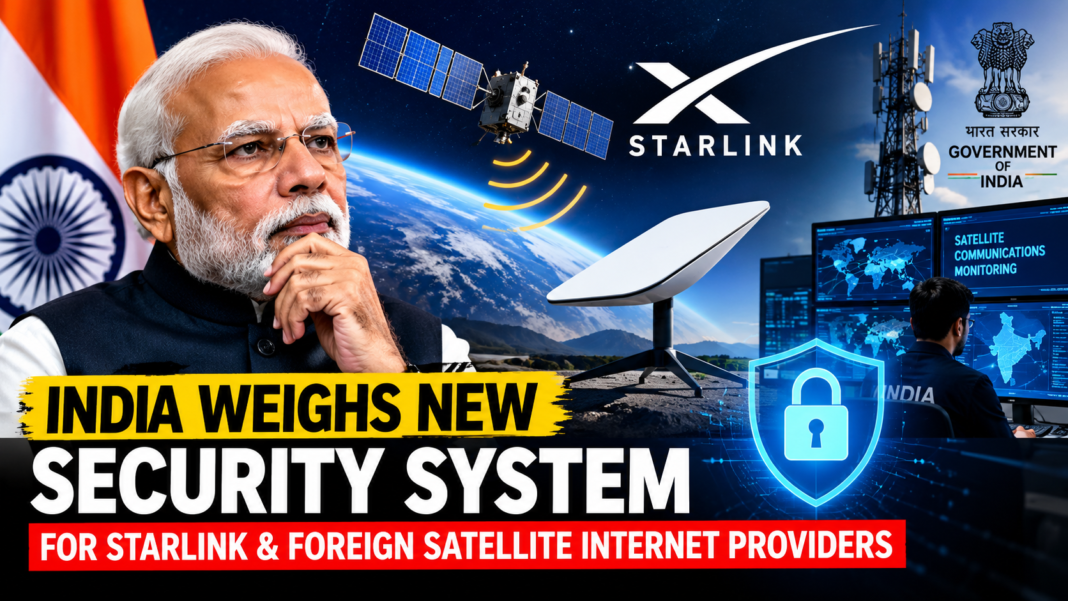
NEW DELHI — India Considers Hardware-Based Security System for Satellite Internet
India is considering a new hardware-based security mechanism to monitor satellite internet traffic carried by foreign providers, including Elon Musk’s Starlink, as the government seeks greater control over the country’s satellite communication infrastructure.
According to a report published by The Economic Times on October 20, the proposed system would act as an intermediary between Indian users and overseas satellite communication networks. The discussions involve a dedicated hardware device through which satellite traffic would pass, potentially allowing authorities to strengthen the enforcement of national security requirements.
However, the proposal remains under discussion. The government has not publicly confirmed a final implementation decision, a deployment schedule or the complete technical specifications of the proposed equipment.
What Is the Government Planning?
According to The Economic Times, the proposed device could be installed either at subscriber premises or at satellite ground stations.
Officials cited in the report said the objective is to establish an additional layer of control over satellite communications provided by foreign operators.
The report also indicated that public-sector research and development organisations could contribute to developing the technology, while participation from selected private companies remains possible.
The central concern is whether India can effectively enforce its security requirements when communication networks are operated by companies headquartered overseas.
Nevertheless, the proposal’s exact technical capabilities remain unclear. There is currently insufficient publicly available information to establish whether the system would inspect specific categories of traffic, collect additional user information or introduce particular forms of surveillance.
Why Is Satellite Internet Security Becoming Important?
Satellite internet can provide connectivity in remote villages, mountainous regions, border areas and locations where conventional broadband infrastructure is difficult to establish.
However, satellite networks also create regulatory challenges because their infrastructure and network operations may span multiple countries.
For India, the principal concerns include national security, the handling of domestic internet traffic, lawful interception and the ability to enforce Indian regulations on foreign-operated networks.
The Department of Telecommunications already requires satellite communication providers operating under its Global Mobile Personal Communication by Satellite (GMPCS) framework to comply with licensing and security conditions.
These include requirements concerning privacy, lawful interception and the routing of Indian traffic through authorised gateways established within the country.
The proposed hardware system could provide an additional mechanism for enforcing security requirements, although its precise relationship with the existing regulatory framework has not yet been publicly established.
Starlink Is Still Awaiting Final Clearances
Starlink has secured a GMPCS authorisation in India, but this does not mean it can immediately begin commercial satellite internet services.
In an official statement published on October 8, 2026, the Press Information Bureau said the government had issued GMPCS authorisations to three companies: Starlink Satellite Communications Private Limited, Jio Satellite Communications Limited and OneWeb India Communications Private Limited.
The government also confirmed that security assessments for all three licensees were underway.
According to the statement, companies must complete the applicable security requirements before proceeding to the next stage of seeking spectrum assignment.
The government rejected allegations that its regulatory framework was discriminatory, stating that all three companies were at broadly the same regulatory stage.
This distinction is important: a satellite communication authorisation is not, by itself, permission to begin commercial services.
The proposed hardware system could introduce another consideration for foreign satellite operators, but its actual impact will depend on the government’s final decision and the requirements imposed on service providers.
Wider Debate Over Starlink and National Security
The proposal comes amid increasing debate over India’s satellite internet policy.
On October 13, Reuters reported that Swadeshi Jagran Manch had urged the government to prevent Starlink from launching services in India, citing national security and data sovereignty concerns.
The report also described disagreements surrounding Starlink’s entry into the Indian market and allegations by Elon Musk that regulatory delays were unfairly affecting the company.
India’s Communications Ministry, however, said security assessments were underway for Starlink and competing satellite ventures backed by Reliance Jio and Bharti Airtel, rejecting suggestions that the approval process was discriminatory.
These developments demonstrate that the debate extends beyond a single company to questions about regulatory oversight, competition and control over critical communications infrastructure.
What Could It Mean for Consumers?
The proposed security mechanism could have several implications, although its actual effects remain uncertain.
National security: A properly designed system could help authorities enforce applicable security requirements and exercise greater oversight of satellite communication networks.
Privacy and accountability: The government would need to ensure that any monitoring arrangements comply with applicable law and include appropriate safeguards for users’ information.
Internet accessibility: Satellite connectivity could help improve internet access in underserved areas. However, the proposal’s impact on subscription prices, connection speeds and service availability cannot yet be determined.
Competition: Additional technical requirements could affect how providers prepare their networks for commercial operations. The extent of any effect on market competition will depend on the final rules and their implementation.
These are potential consequences, not confirmed outcomes of the proposed system.
What Happens Next?
The immediate question is whether the government will formally approve the hardware-based mechanism and establish the technical standards governing its operation.
Further details are also needed on which providers would be required to use the equipment, how compliance would be verified and what safeguards would govern access to communications data.
Until an official decision is announced, the proposal should be understood as part of India’s ongoing efforts to strengthen oversight of satellite communication services rather than an implemented policy.
For India, the challenge is to protect national security while ensuring that regulatory requirements do not unnecessarily restrict competition or delay the expansion of connectivity.
Global Nexus Media will continue to monitor official announcements and developments affecting India’s satellite internet sector.


